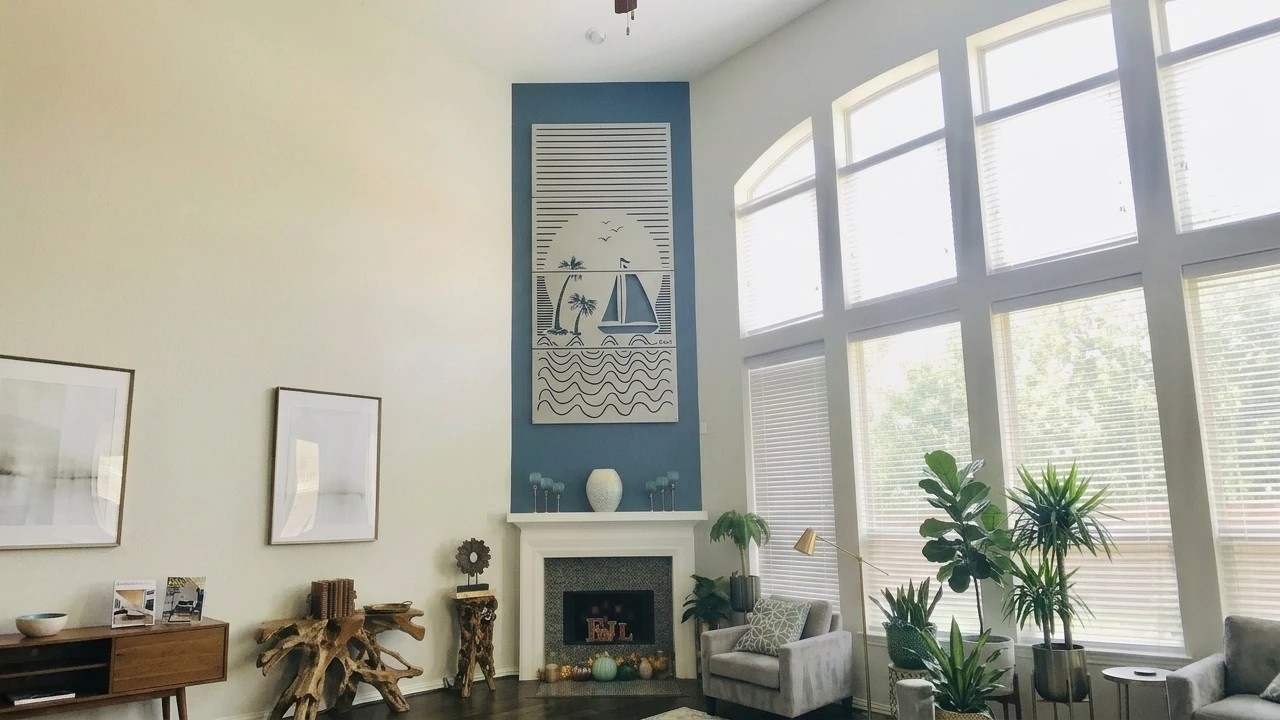
That big, empty wall in your living room isn’t a problem — it’s an opportunity most people underuse. They go too small, hang it too high, or choose something that disappears against twelve feet of drywall. Extra large wall art for the living room solves all of that when you know how to approach it.
This guide covers sizing, placement, material, and style — so you can fill a large wall with confidence and get it right the first time. If you’re still deciding on material, our guide to what metal wall art is and how it’s made is a good place to start.
Why Scale Changes Everything
There’s a reason professionally designed rooms look intentional. Most of the time, it comes down to proportion.
Art that’s sized correctly for its wall doesn’t just fill space — it commands it. Extra large wall art for the living room works because it matches real dimensions instead of shrinking away from them. A piece spanning five feet on a twelve-foot wall gives the eye somewhere to land. Something half that size leaves the wall feeling unfinished and the room feeling unsettled.
Metal pieces handle scale especially well. CNC-cut aluminum with open negative space delivers visual presence without visual weight — the wall shows through, the room breathes, and the piece anchors without overwhelming. The Pacific and Serengeti are good examples: oversized pieces that hold an entire room without dominating it.
Edge of Light — an eight-panel composition at 44″ × 86.5″ that anchors a living room without crowding it.

The Sizing Rules That Actually Work
A few practical guidelines will get you in the right range for almost any room.
The two-thirds rule: Artwork should span roughly two-thirds the width of whatever’s below it. For a standard 84-inch sofa, that means a piece around 56 inches wide. For a 6-foot fireplace surround, aim for something in the 48-inch range. Apply the same math to any furniture or architectural feature you’re centering the art above.
Use your vertical space: When you have ceiling height, use it. Taller compositions draw the eye upward and make the room feel larger. Horizontal pieces work better when width is the priority — directly above a long sofa, for instance.
One statement or a gallery wall? Both can work, but one piece of extra large wall art for the living room typically hits harder than six smaller ones competing for attention. One strong composition reads as a decision. Multiple small pieces often read as indecision.
Not sure what size fits your wall? Request a free quote — we’ll help you nail the dimensions before anything goes into production.
Getting Placement Right
Most people hang art too high. The center of the piece should sit around 57–60 inches from the floor — eye level for a standing adult. This holds whether it’s floating on an open wall or anchored above furniture.
Above a sofa or console, leave 6–10 inches of space between the top of the furniture and the bottom of the art. Less than that feels crowded. More creates a disconnect that makes the piece look stranded.
For large wall art on a completely open wall, give it something to relate to. A floor lamp, low console, or area rug beneath the piece creates a visual anchor. Without that relationship, even a great piece can feel adrift.

Montecarlo scales from a single accent panel up to a 93-inch four-panel composition — built for walls that need a real focal point.
Choosing a Style That Fits the Space
Scale gets you in the right range. Style makes it work with everything else in the room.
Open, airy spaces pair well with nature-inspired or abstract designs — flowing organic forms, compositions with negative space that let the wall breathe through them. These bring presence without density.
Darker or more layered rooms can carry intricate geometric compositions. The added detail enriches rather than competes.
Neutral rooms are where large metal wall art really earns its place. When walls and furniture are calm, one strong piece becomes the room’s entire identity.
On finishes: black, gold, silver, and bronze are all available. Match the finish to your existing fixtures — lighting, door hardware, furniture legs — for a cohesive look. Your painter or contractor can help you hit the exact tone if you’re working against a specific palette.
Why Metal Works at Large Scale
Canvas warps. Prints fade. At large scale, material quality stops being a background detail and becomes the whole story — there’s nowhere to hide low quality when a piece runs four or five feet across.
Cold Edge Gallery pieces are CNC cut from high-quality aluminum, which keeps the weight manageable even at statement sizes. A 48×60-inch sculpture is substantial, but hanging it doesn’t require structural work.
The surface quality shows at scale too. Aluminum catches light differently across the day — crisp and bright in the morning, warmer and more shadowed by evening. That’s not something flat prints can replicate.
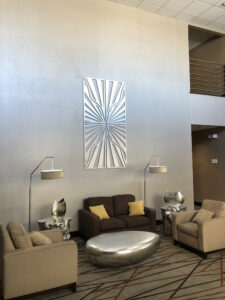
The brushed aluminum surface on Edge of Light shifts with ambient light throughout the day.
Make the Wall Work for You
Extra large wall art for a living room isn’t about filling empty space. It’s about making the room feel resolved — like every decision was intentional.
Start with the right size. Choose a style that fits the room’s energy. Pick a material built to last. Then let the piece carry its weight.
Browse the collection or request a custom quote — we’ll build it to the exact dimensions your wall needs.